Candidate for Governor of New York
Get paid to get better at your job.Vote James Kernan.
Not tuition. Not debt. Not nights and weekends — skills on the clock, at full pay. That's how a job turns back into a career, a raise, a life you can afford. And it's how New York walks into the age of AI and automation as the best-prepared workforce on earth. James Kernan is running for Governor to make it happen.
The Issue
The central issue of our time: skills, or you fall behind.
The pace of change is accelerating, and the promise to retrain people afterward has never once been kept at scale. Lose a rung now and you do not get it back — not the career, not the wage, not the years. AI and automation are moving faster than anyone can keep up with. If we miss this one, we may not get another. That was a choice, and a choice can be reversed. New York built the canal, the subways, and the grid. We can build the most skilled workforce in America next.
Industry shipped the work out
NAFTA and the trade deals that followed let companies move the factories to protect the margin. The promise was that workers left behind would be retrained. Never happened.
Training became a cost to cut
A machinist's job became a warehouse shift. A career became a gig. Employers stopped paying to teach anyone, and the first rung of the ladder disappeared.
Now AI is coming for the rest
Automation does not need a trade deal to take a job. It is already rewriting clerical, logistics, and service work. Do it again with no training and we lose what is left of the middle class.
The fix is already law
A federal court ruled decades ago that employers owe workers paid on-the-job training with related classroom instruction. Business funds both parties, so Albany has never enforced it. That is the rest of the story.
“If the work requires the skill to do it, the work should teach it — on the clock, at full pay.”
No other candidate on the ballot has a plan for this. Not one.
This used to be the norm
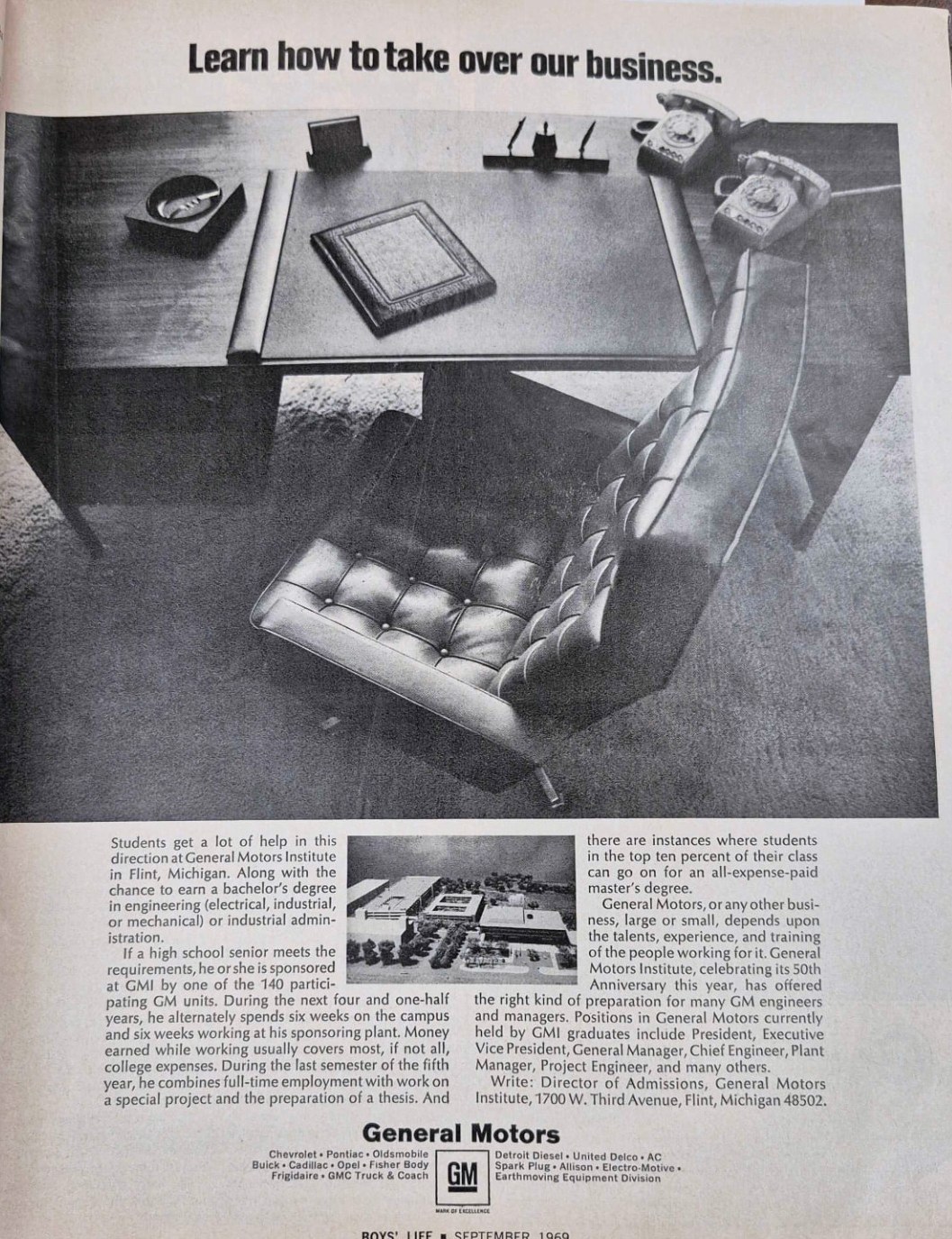
Companies once advertised training as the benefit.
In 1969 General Motors ran ads inviting eighteen-year-olds to learn the business on the company’s dime — six weeks in class, six weeks paid on the plant floor, a degree at the end, and a path to running the place. GM was not unusual. Ford, GE, Bell, the railroads, the trades: employers competed on how well they trained you.
We didn’t lose the middle class. We stopped training it.
Call our campaign
Not sure he's your candidate? Ask us anything.
Who James Kernan is, what he stands for, what he'd do as governor — ask it all and decide for yourself. Call 24/7 and speak in the language you prefer.
Failed Settlement of Class Action Lawsuit
Fifty years of “we’ll get to it”
A worker named Al Percy sued in 1973 to make paid on-the-job training real. He won a settlement. Albany let it die. Every governor since has left it there.
Earn while you learn
Paid hours beside a journeyman plus classroom instruction. Already approved for carpenter, HVAC, plumber, steam fitter, mason, steelworker, roofer, operating engineer, electrician, and laborer.
Not a dime of tax money
Job insurance already covers safety training. Trained workers are more productive and get hurt less, and those savings fund the apprenticeships that create the next generation of skilled workers.
Real standards
Federal and state labor department requirements, prevailing-wage benefits, and around-the-clock coverage for health, disability, and lost wages.
1973
Al Percy sues
A New York sewage plant worker who trained on the job in the Trinidad oil fields filed a class action to open up opportunities in the skilled trades through paid apprenticeship training.
1977
New York agrees to fix it
The settlement is carried out by the governor's Executive Order 45.
1979
The courts strike it down
New York’s highest court voids Executive Order 45 — not on the merits, but because a governor cannot create the program without the Legislature passing it into law. Albany never did. The remedy has sat on a shelf ever since.
1991
Congress hands over the tool
Civil Rights Act amendments let workers demonstrate a better employment practice — and make an employer's refusal to adopt it unlawful.
2021
Back in federal court
New suits fail in the same demand to employers, owners, and the State of New York again. Dozens of federal cases are thrown out at once — not because the training isn’t needed, but because a court says the class can’t force a fifty-year-old settlement on employers through new lawsuits. The courtroom door closes. The only way left is political.
2026
A governor who enforces it
James Kernan doesn’t need a new lawsuit. He needs the office. As governor he sends the Percy Program to the Legislature, signs it, and directs the Labor Department to enforce paid on-the-job training as a condition of doing business in New York. Fifty years of “we’ll get to it” ends the day he takes office.
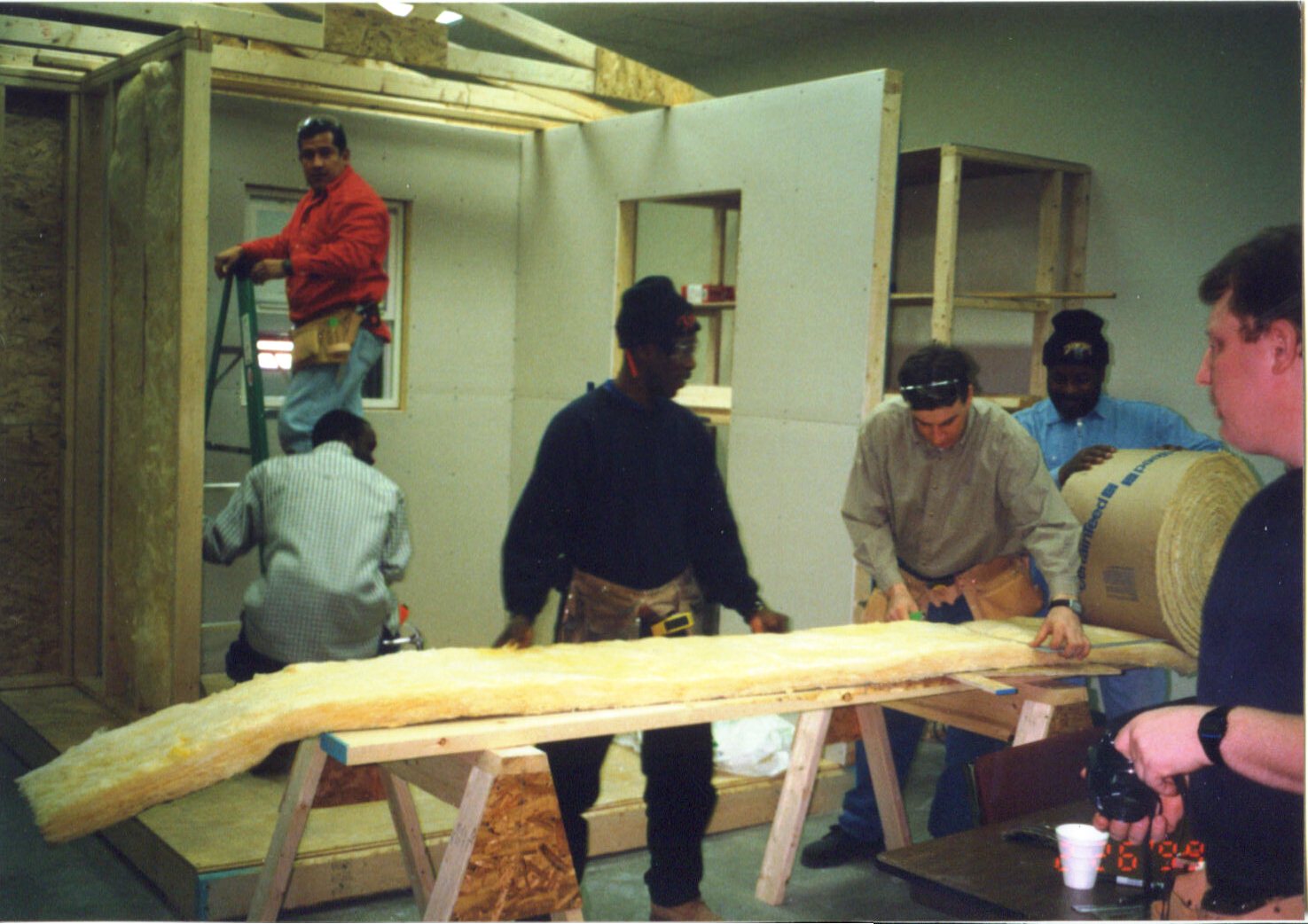
Apprentices in a state-registered on-the-job training program — paid work, real instruction.
The Vision
Turn jobs back into careers
“Opening the gates of opportunity means nothing if nobody ever taught you the skill.”
He has spent forty years building the thing everyone else only promises: training that comes with a paycheck. Three rules make it work.
- Train on the clock, not on your own dime
- Paid on-the-job hours beside someone who already has the skill. You earn while you learn, so you can actually finish.
- No new taxes, no new agency
- The training is paid for out of what safer, better-trained job sites already save on insurance and injuries. It creates taxpayers instead of needing them.
- A career, not a gig
- Skills, mentoring, and the bonding small firms need to bid real work — the difference between a paycheck this month and a trade for life.
This already works
- Apprentices earn union-scale wages from day one, while they train.
- Nationally accredited (NCCER) and registered with New York State's Departments of Labor and Education, with SUNY Maritime College.
- Already expanding past construction — health care, home care, EMT and first responders, mechatronics, and clean energy.
The Record
Semper fidelis
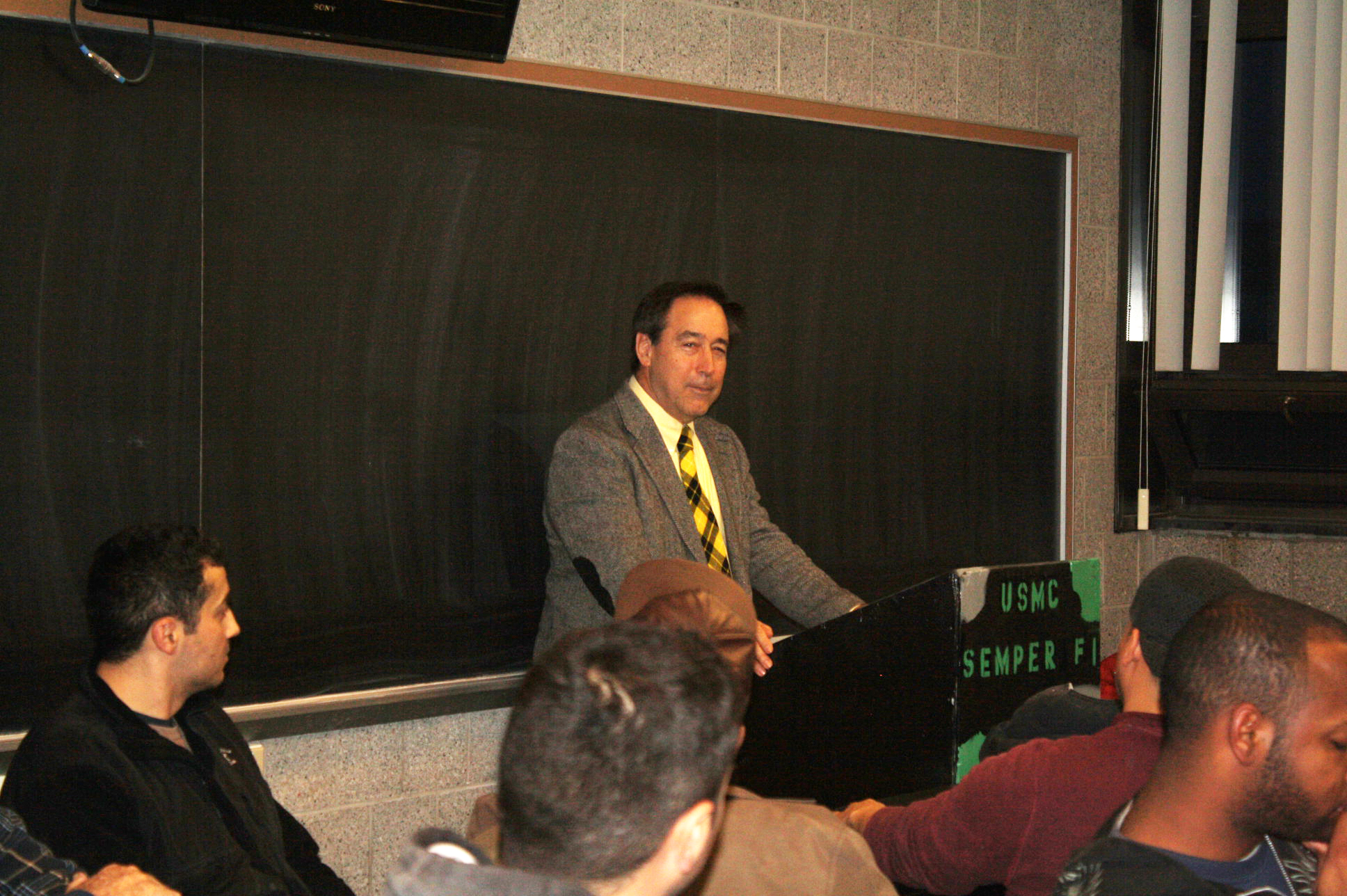
Marine. Engineer. The man who wrote a training program the State of New York signed off on and then ignored. This platform comes from a record, not a press release.
1968
Enlisted in the Marine Corps under the draft lottery. Parris Island, Platoon 1039, combat engineer — his first lesson in what paid training does for a person.
1976
Licensed Professional Engineer; founded an engineering firm in Oriskany.
1978
Helped prepare the apprenticeship training remedy in Percy v. Brennan — the case New York still hasn't enforced.
1990
Founded an insurance company to get small and shut-out contractors the bonding they needed to bid public work.
2001
New York State registered his on-the-job training program.
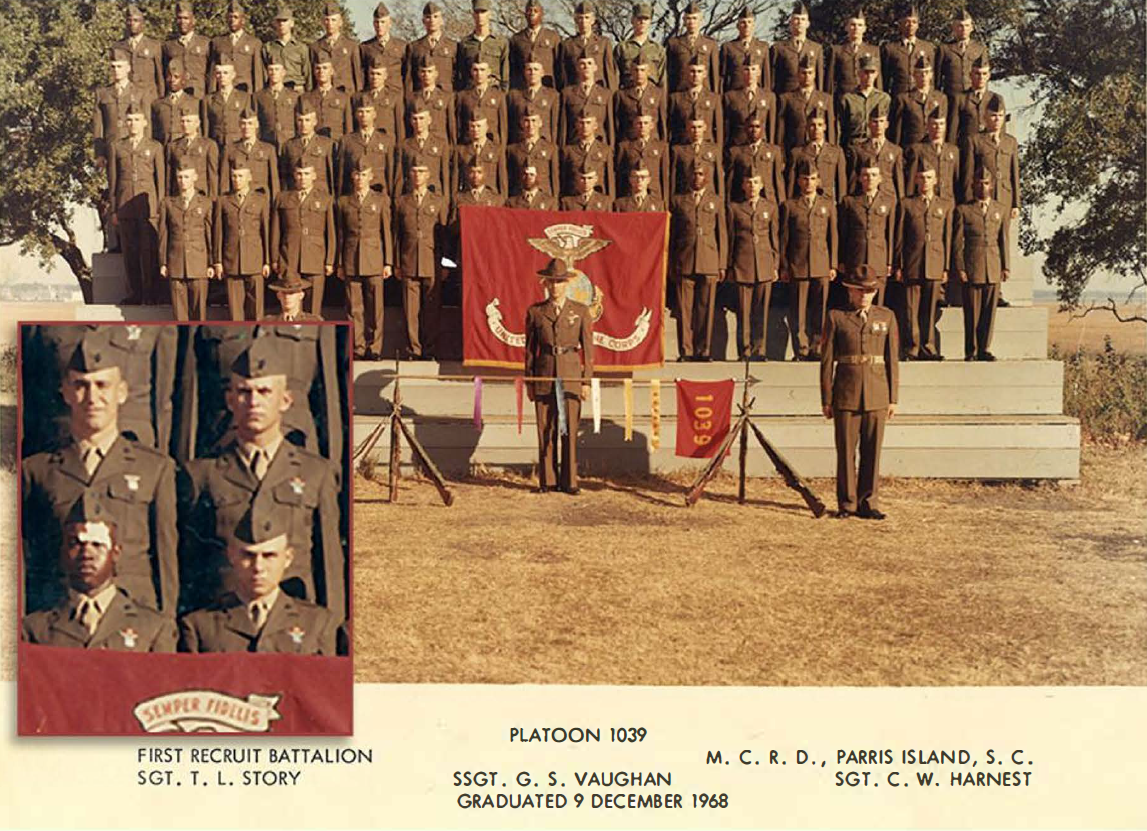
Platoon 1039, MCRD Parris Island — December 1968.
Trades already registered with New York State
- Carpentry
- Plumbing
- Steam & Pipe Fitter
- Mason
- Steelworker
- Roofer
- Operating Engineer
- Electrician
- Skilled Laborer
Health care, home care, EMT, and first-responder tracks are next.
What paid training produces
Al Colen came in as a bricklayer and mason apprentice and was placed on the Holland Tunnel refurbishment. His crew finished a two-year job in nine months. He is still with that company — and still moving up.
We Can Win This
Write-ins win. It has already happened. Twice. Recently.
A write-in is not a protest vote. It is a ballot line voters build themselves — and when enough of us do it on the same day, we win.
Byron Brown
Mayor of Buffalo, 2021
Lost his own party's primary, ran as a write-in, and won the general election outright. In New York. Four years ago.
Lisa Murkowski
US Senate, Alaska, 2010
Lost her primary, mounted a write-in campaign, and returned to the Senate — the first write-in Senate win since 1954.
Join the campaign
Get involved. Make a difference.
No corporate money. No party machine. Every stamp we ship, every voter we reach, comes from people who decided to be part of this. Chip in and you’re in.
- $10 — ships two write-in stamps to voters
- $25 — prints a precinct’s worth of instruction cards
- $50 — puts the platform video in front of 1,000 New Yorkers
Make a contribution
Payments are processed securely. The maximum online contribution is $5,000.
By contributing, you confirm that:
- You are a U.S. citizen or lawfully admitted permanent resident.
- This contribution is made from your own funds, not those of another person or entity, and you are not being reimbursed for it.
- You are not a corporation, foreign national, or federal contractor prohibited from contributing.
- The funds are from a personal account, not a business account.
Contributions are subject to New York State Board of Elections limits and may be publicly disclosed, including your name and address. Contributions are not tax deductible.
Write-In Stamp
Write James in — or stamp it
Write-in campaigns have been won before. The hard part is legibility and consistency, which is exactly what the stamp solves: the same clean impression, on every ballot, in every county. The stamps are printed in a limited run — one per voter, while supplies last.
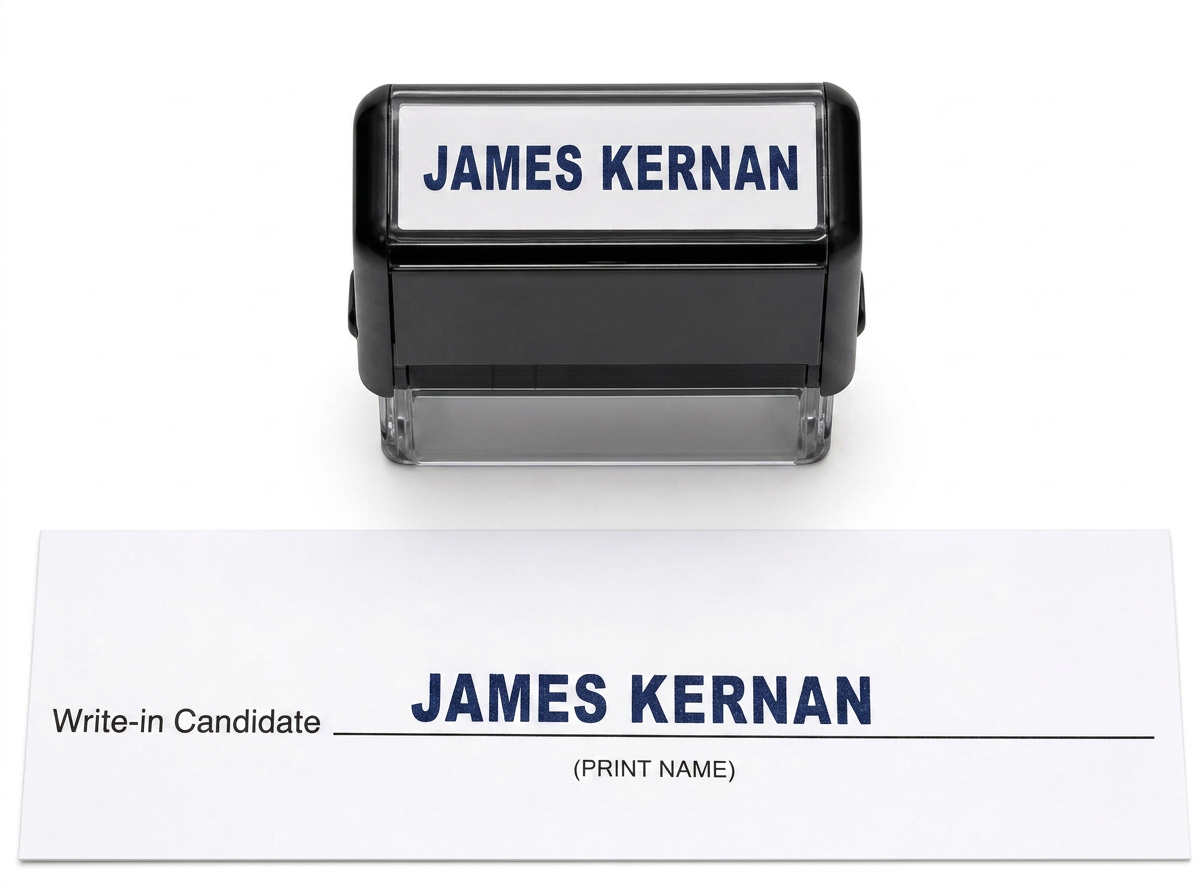
How to write James in
- 1Find the write-in line for Governor on your ballot.
- 2Stamp (or neatly print) JAMES KERNAN on that line.
- 3Fill in the oval or box next to the write-in line — a name without the mark may not be counted.
- 4Submit your ballot as usual, in person or by mail.
Limited supply — one per voter
Request your stamp
Tell us where to send it. Stamps are provided free to New York voters while supplies last. Because the run is limited, requests are for one stamp per person — and are filled in the order they arrive.
Get Involved
Join the fight
Sign up and we’ll show you exactly how to help — how to write James in, when your ballot deadlines hit, and where to pitch in near you.